
JMS Yachting Receives DOC Malta
JMS Yachting Receives DOC Malta We are very proud to announce that our Fleet Managers Zoe Bolt-Falconer and Rob Pijper have just passed the external DOC Audit for Malta. Along with DOCs from Cayman Islands, Jamaica, Isle of Man, Marshal Islands, British Virgin Islands and now Malta, the technical team at JMS are expanding their range of service to even more registered yachts. Our mantra is not just to provide the highest standard of service but to analyse the fails that have affected so many clients, so in turn we can ensure JMS clients remain the best protected and most properly served of all. Safety Management System:It is mandatory for all ships to follow and implement the ISM Code by the Safety Management System (SMS)There are audits both internally and externally to eliminate all possibilities of safety issues and to verify the compliance of the ship and the company are up to the standards of the code. Safety Management Certificate:A Document of Compliance (DOC) is a certificate issued verifying the company and the ship personnel are operating in accordance with the code. The internal audit is carried out by the company and ship itself whereas the external audit is carried out, every 2-3 years, by the ships flag state. If the vessel has successfully incorporate all the safety requirements, the company is then issued with a Certification of Safety Management or the Safety Management Certificate. NEED HELP WITH OPERATIONAL, TECHNICAL OR COMPLIANCE ISSUES ON BOARD? Talk to our technical gurus They are probably… the most experienced team in the industry Still Not Sure? In life, you never know until you ask. As Master Mariners, not sales people, we are here to guide you. CONTACT US
Meet Zoe Bolt-Falconer
Meet Zoe Bolt-Falconer Zoe Bolt-Falconer We would like to introduce you to Zoe Bolt, the new addition to our team! A very impressive lady, Zoe started her career on the water when she was 18 as a Merchant Navy Deck Officer Cadet. She then spent 10 years at sea, working up to C/Off and SDPO – all in the offshore industry. More incredibly so, Zoe was probably one of the first woman to gain an unlimited DPO certificate. She has a wide range of experience as she has worked on different vessels: supply, survey, DSV, cable layers, salvage and flotels and for companies such as Stolt Offshore (now Subsea 7), Smit International and Prosafe. In 2003, Zoe came ashore and moved to the Netherlands. For the last 17 years, she has worked in QSHE Dept for two Dutch Shipping companies, these being general cargo vessels. Zoe was DPA, CSO and carried out the usual tasks related to this function: internal audits – vessels and office, ISM, ISPS, MLC , implementation of international and national regulations, accident investigation and so forth. Zoe has now started a new chapter with JMS Yachting as Fleet Compliance Manager and we are very excited to have her on board ! Without a doubt, she will be a great asset to our growing company ! Qualifications:• Accident Investigation (Copla)• Risk Assessment (Lloyd’s Register)• Lead Auditor – Quality Management Systems ISO:9001:2008 (Lloyd’s Register)• ILO Maritime Labour Convention (Lloyd’s Register)• Ballast Water Management Training (Lloyd’s Register)• CSO (NTTA)• Internal ISM audits (Lloyd’s Register)• Dynamic Positioning Operator-unlimited, Cert. No. 1050, (10,000 DPhrs)• UK Licence COC “Chief Officer” Still Not Sure? In life, you never know until you ask. As Master Mariners, not sales people, we are here to guide you. CONTACT US
Outbreak Management Plan
Outbreak Management Plan BEST PRACTICE WITH JMS YACHTING As part of your on board Safety Management System, do you have a ‘plan’ in writing? If not and you are part of a Port State Control, this could be classed as a deficiency…. Primarily developed to cover seasonal related gastro infection onboard, these ‘Best Practice’ papers are now more important than ever and should form part of every yachts’ Safety Management System. It comes down to common sense but it means you have a plan! Do you have a medical questionnaire to complete? Do you know where your on board isolation area is? What happens with hours of rest with other crew members? Do you know WHAT you need to report and to WHOM? This Plan has been developed using the MCA, APHA and HPA’s (now PHE) “Guidance for the Management of Norovirus Infection in Cruise Ships”, published in 2007, as a basis. It is meant to provide the Masters of our managed Yachts with the necessary guidance when faced -primarily- with an outbreak of a -often seasonal- gastro-intestinal infection on board. However, in light of recent epidemics of other infectious diseases such as Swine Flu, Ebola, Zika, and most recently Coronavirus, this plan can hopefully provide some initial guidance around how to prevent and combat an outbreak, should they manifest themselves on board the vessel. Naturally, the control measures this Plan contains may have to be adapted to the specifics of the infection it is trying to manage. Franc Jansen JMS Yachting Do you have a plan on board? Do you need help implementing such a plan? Why haven’t you got one on board already? Still Not Sure? In life, you never know until you ask. As Master Mariners, not sales people, we are here to guide you. CONTACT US
Meet Rachel Fisher
Meet Rachel Fisher Meet the team – Rachel Fisher, Marketing Manager We are pleased to introduce you to Rachel Fisher who joined JMS Yachting in 2019 as our Marketing Manager at our head office in Monaco. She studied at the University of Manchester reading Russian and Business & Management working during the summer holidays, as a stewardess on a private Sunseeker yacht MY Fizz in Saint Jean Cap Ferrat. Since the completion of her degree, Rachel has combined her love of travelling with her career. Working in Mauritius for a Management Company as their Client Relationship Officer, then working for a Private Real Estate Fund in Australia before moving back to France and working in the events industry in Monaco. Fluent in English, French and Italian with an intermediate level in Russian, Rachel has great interpersonal skills and a strong understanding of different cultures which is a great asset to JMS given the international nature of the yachting industry. At JMS, we thrive on being transparent, approachable whilst having some fun! This is the foundation of building good relationships in which confidence can grow and ideas can flow. Please say G’Day, Bonjour, Ciao or Zdravstvuyte to Rachel ! Still Not Sure? In life, you never know until you ask. As Master Mariners, not sales people, we are here to guide you. CONTACT US
Compliance matters
Compliance matters Inventory of Hazardous Materials for M/Y DAR Team work is great! The JMS Yachting Management team and the DAR crew announce the certification of the Inventory of Hazardous Materials for M/Y DAR. The certificate was issued by Lloyd´s Register under the authority of the Government of Cayman Islands. Compliance is mandatory for yachts over 500GT and at 2926GT M/Y DAR was of course just a little over the limit. “It was a lot of work for such a large vessel, but I’m glad we delivered well ahead of the deadline.”Said Rob Pijper JMS Yachting Operations Director. The multi-award winning 90m yacht was built by Oceanco, delivered in 2018 and built to Lloyds Register class. The compliance management for MY DAR is handled by JMS Yachting. If you have any questions about the Inventory of Hazardous Materials (IHM) Certification, please contact Operations Director – Rob Pijper Certificates:Statement of Compliance of Hazardous Materials with the requirements of Article 12 of the regulation (EU) 1257/2013 on ship recycling Statement of Compliance of Hazardous Materials on Inventory of Hazardous Materials (IHM HKC)Supplement to the Statement of Compliance on the Inventory of Hazardous Materials (IHM) If you are interested in learning more about certification for the Inventory of Hazardous Materials or any other compliance issues, please complete the form below Still Not Sure? In life, you never know until you ask. As Master Mariners, not sales people, we are here to guide you. CONTACT US
Completed your IHM?
Completed your IHM? Last Call for IHM Compliance – (Inventory of Hazardous Materials) JMS Yachting Fleet Manager, Rob Pijper asks, whether you have submitted the Inventory of Hazardous Materials list to your Classification Society? If you are reading this and have never heard of Inventory of Hazardous Materials (IHM) and your yacht is over 500GT and commercial; you are very late and perhaps even too late. IHM compliance will take some time achieve and the regulations are coming into force on 31 December 2020. Everyone has seen the big ships being scrapped on the beaches in India, an environmental disaster happening before our eyes. The EU and IMO regulations are designed to prevent this in the future. The Inventory of Hazardous Materials is a ship (yacht) specific list of hazardous materials to protect the health and safety, and the environment at ship recycling facilities. Funnily enough the IMO International Convention for the Safe and Environmentally Sound Recycling of Ships, 2009 (the so-called “Hong Kong” Convention) – is not yet into force. As always IMO resolutions take ages because the prerequisite minimum number of signatory Member States and tonnage percentage needs to be reached. However the EU regulation (*1) is in force. It says that: 1. By 31 December 2020, existing EU-flagged vessels will need to maintain a certified Inventory of Hazardous Materials (IHM) list on board (i.e. the list and an accompanying Certificate issued by the yacht’s Classification Society or Flag State) 2. By 31 December 2020, existing non-EU flagged vessels calling at a port or anchorage of a EU member state must have on board the IHM list and a valid Statement of Compliance (issued by the yacht’s Classification Society or Flag State). 3. New EU-flagged vessels (built after 31 December 2018) need an IHM and Certificate issued by the yacht’s Classification Society or Flag State upon entry into service. As soon as the Hong Kong Convention will enter into force, all Statements of Compliance issued for non-EU-flagged vessels will have to be converted into Certificates issued by Class or Flag State. While the EU and IMO are mostly aligned, there are slight differences between the EU and IMO requirements for the Inventory of Hazardous Materials. So what needs to be done?An expert needs to be appointed by the vessel in order to compile the IHM list. (2*) The final IHM list as issued by the expert will have to be submitted to the Classification Society. The Classification Society will review the provided documentation and, once approved, a Class Surveyor will attend the vessel in order to verify the approved list and issue the required Certificate (EU flagged vessels) or Statement (non EU flagged vessels). “Obtaining certification will likely be a matter of weeks if not months” So far this is the work of the expert. However, in order to maintain compliance, the crew on board needs do the maintenance on the IHM. Every compliant yacht should formally designate a person on board responsible for maintaining and updating the inventory. If any items recorded in the IHM are added to, removed or replaced, or the hull coating is renewed, the IHM should be updated using information obtained from Material Declarations (MD) and Supplier Declarations of Conformity (SDoC) forms. The requirement for MD and SDoC forms should therefore be included in the yacht’s internal procurement policy at the time of the initial IHM compilation. These MD and SDoC must be collected for every item brought on board the yacht. The work will be audited during surveys and the sale of the yacht. As you can imagine, the implementation process will take time. Obtaining certification will likely be a matter of weeks if not months. Furthermore, now the deadline is approaching, Experts and Class approval will become increasingly unavailable. If you are interested in learning more about certification for the Inventory of Hazardous Materials or any other compliance issues, please complete the form below Still Not Sure? In life, you never know until you ask. As Master Mariners, not sales people, we are here to guide you. CONTACT US
Meet Rob Pijper
Meet Rob Pijper Meet the team – Rob Pijper – Operations Director We would like to introduce you to Rob Pijper, Fleet Manager, DPA, Director – JMS Palma. Rob spent over 13 years at sea starting as an apprentice on board gas tankers. He then spent four years as a Chief Engineer on commercial vessels. When moving to a shore based position Rob worked with Lloyds Register as a senior surveyor and auditor. Fluent in English and Dutch, Rob’s introduction to the superyacht world came through his time with Lloyds Register, moving on to work as a Technical Manager / DPA with a large Dutch yachting company. Rob’s broad experience includes a project on a special Polar Explorer. Not only does he have an incredible knowledge but also has strong values. Rob explains “In the yachting industry, you come across many mentors throughout our careers without them even knowing they were a mentor. In fact, you learn every day from all the people you surround yourself with.” That is his approach on life. Rob now runs the JMS Palma Office. His strong technical background along with his easy-going manner is an asset to our team. We feel very honored to have Rob as part of the JMS family and we learn from him every day. Playing the probability game, the chances of being inspected would seem slim. But for me, there are two inherent flaws in that logic. The first is one of mindset. Port State Controls exist purely as an added incentive, if one were needed, for owners and captains to ensure their yachts are being run in accordance with MLC 2006 and international safety requirements. They are not ‘traps’ for owners or captains, they are checks for the benefit of all on board. Running a yacht that is knowingly (or even unknowingly) deficient in any aspect of MLC poses enormous safety risks for all on board never mind the consequences of any control that uncovers them. The second flaw in the logic, is that it misses one major fact: Port State Controls are not random. Yachts are selected based on their age, flag, classification society, ISM provider etc. I, like so many experienced yacht managers, can share a catalogue of yachting incidences, some of them catastrophic, that could have been avoided, and in fact came about as a direct result of poor yacht operations and neglect for the minimum safety procedures and regulations that the MLC now codifies. Still Not Sure? In life, you never know until you ask. As Master Mariners, not sales people, we are here to guide you. CONTACT US
Avoid PSC Deficiencies
Avoid PSC Deficiencies “PORT STATE CONTROLS ARE NOT RANDOM…AND THE LONGER A VESSEL GOES WITHOUT BEING CONTROLLED, THE HIGHER UP THE PRIORITY LIST IT GOES!” Franc Jansen This is a very generic “one size fits all” category for Port State Control Officers. Anything related to lack of maintenance, quality seamanship, adherence to procedures and good record keeping can result in a conclusion of poor Safety Management. And if too many ‘little’ non-detainable deficiencies are uncovered by PSC they can be grouped together to form one major overall detainable deficiency. Clearly, the only way to prevent this is to properly manage safety on board. Your ISM provider should always ensure you have a practical SMS specific to your yacht, one that is practical and efficient and does not overly burden the crew with administration. As I mentioned earlier, the starting point is not just to do the minimum required for compliance, it is to do what is necessary for quality seamanship. Compliance will always follow good seamanship. On board, the SMS starts with a commitment from the Captain and the Chief Officer to adhere to and implement the SMS. Quality senior officers make the SMS their own and take ownership of it. If a procedure or check-list is not right, they adapt it for the better. When senior officers believe in the system they are operating, a culture of safety is created amongst the whole crew. Yachts that are efficiently run with a smart SMS and a crew with a positive attitude to high safety standards, spend no energy worrying about the risks of a Port State Control Inspection because frankly, there rarely are any! The Radio Certificate is not one simple certificate – it is a series of certificates and records including the Record Epirp registration and annual testing, radio license, LRIT and IAS amongst others. All certificates must be valid, up-to-date and ready for inspection. Completing the GMDSS log may be a boring and repetitive task, but it is an important requirement, so it needs to be done. Captains should always ensure there are enough qualified persons on board who can operate the radio installation, two on-board crew should hold the required licenses. It might seem obvious, but often on a busy yacht, it is the simple and the obvious that gets missed and the fact this is the 8th most common deficiency proves that. Emergency escapes need to be kept free and accessible at all times. While storage is always a problem on yachts, using an emergency escape as storage should never be an option. Equally, and this is another common fault, the emergency escape hatch should never be closed so tightly that only the biggest engineer or deckhand can open it. Emergency escapes should be checked regularly on periodic safety rounds. All Officers and Crew must hold valid qualifications endorsed by the Flag of the yacht. It is not enough, for example, to have a UK MCA certificate on a Malta flagged yacht. The Flag of the yacht must have specifically endorsed the Certificate of Competence. An Officer without an endorsement cannot function as an Officer – that is a situation that can lead to the yacht failing on the required minimum Safe Manning document and being detained. It is a classic example of why Crew Certification on-board needs to be controlled and followed, with records kept of all Crew Certification and their expiry dates. Equally, every time a crew member arrives on board, it is important that the responsible Officer on board checks that all the original certificates for that Crew member are actually on the yacht. Obviously voyage planning is required for all yachts going to sea and it is the Master’s duty to ensure a plan is drawn up detailing all the relevant factors and ensuring the requirements and procedures of the Flag State of SMS are being followed (SOLAS Chapter V, with Annex 24 and 25 list all the regulations for voyage and passage plans). For longer voyages this is usually not an issue as they are known well in advance and come with plenty of time to prepare, but we all know how difficult it can be, mid-season, to make detailed voyage plans that take into account the ever-changing whims of our esteemed guests. In Annex 24, small vessels and pleasure craft are recognised and as such are required to make a voyage plan, and whilst the plan doesn’t actually need to be written down, the better your planning the safer you and your guests will be. And, in the unlikely event of a situation, the records you keep and are therefore able to show can go a very long way to ensuring any blame doesn’t fall unnecessarily on your shoulders. It is always prudent to remember that the Freeboard Marks on the hull need to be in accordance with the Load Line Certificate of your yacht. The Freeboard Marks (or Plimsoll Marks) are usually a line indicating the Main Deck and a circle with a line with the initial of Class on the yacht indicating the maximum Load Line. I don’t want to state the blindingly obvious, but removing these marks on aesthetic grounds or having so much fuel, water or ballast on board so that the bottom line is underwater is a big NO-NO that will land you in deep trouble with PSC. All commercial yachts over 500GT need to maintain a Continuous Synopsis Record (CSR). The CSR contains a list of records for the yacht. Each time a record in the CSR is changed, a new CSR should be issued. The purpose of the CSR is to keep a record of the history of the yacht. So, unlike other certification where obsolete certificates should be removed as soon as a new one is issued, the yacht needs to maintain a full set of CSRs on board. It is also important to check that the current CSR is accurate and importantly, that a full set is ALWAYS ON BOARD.
Meet Lucia Badano
Meet Lucia Badano Meet the team – Lucia Badano – JMS Yacht Management We are pleased to introduce you to Lucia Badano who has more than 20 years’ experience in the yachting industry. She currently is a Fleet Manager, DPA & Project Manager (refit and new construction) for JMS Yachting. Born in Genoa and currently living in Mallorca. Lucia speaks Italian and English. She also has a good understanding of German, Spanish and Dutch. She is a Naval Architect with certification in MLC.Lucia has spent most of her career in the yachting industry as a surveyor for RINA, Lloyd´s Register, Cayman Island and Isle of Man she dealt with all you can imagine in our business, from Plan Approval to new construction surveyor and existing ship surveyor. Lucia is incredibly knowledgeable and thorough. Many yachts worldwide are sailing around with her knowledge. From MY Serene to the new construction of MY Black Pearl, MY DAR and many more. We are very proud to have Lucia on board at JMS Yachting. Thumbs up to Lucia’s expertise and to the women in the yachting industry ! Still Not Sure? In life, you never know until you ask. As Master Mariners, not sales people, we are here to guide you. CONTACT US
Port State Controls rising
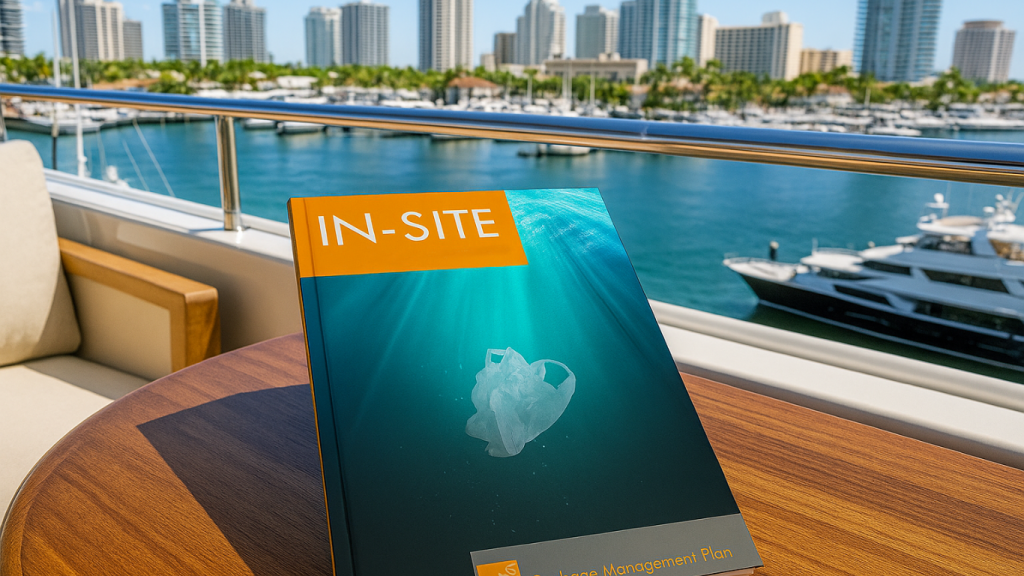
Port State Controls rising Port State Controls are not random and the longer a vessel goes without being controlled, the higher up the priority list it goes… Today, the chances of your yacht being controlled are higher than they have ever been and yet some owners and their captains still feel comfortable running their yachts regardless of that risk and the important consequences of being detained or arrested for deficiencies. Playing the probability game, the chances of being inspected would seem slim. But for me, there are two inherent flaws in that logic. The first is one of mindset. Port State Controls exist purely as an added incentive, if one were needed, for owners and captains to ensure their yachts are being run in accordance with MLC 2006 and international safety requirements. They are not ‘traps’ for owners or captains, they are checks for the benefit of all on board. Running a yacht that is knowingly (or even unknowingly) deficient in any aspect of MLC poses enormous safety risks for all on board never mind the consequences of any control that uncovers them. The second flaw in the logic, is that it misses one major fact: Port State Controls are not random. Yachts are selected based on their age, flag, classification society, ISM provider etc. I, like so many experienced yacht managers, can share a catalogue of yachting incidences, some of them catastrophic, that could have been avoided, and in fact came about as a direct result of poor yacht operations and neglect for the minimum safety procedures and regulations that the MLC now codifies. MLC Safety Procedures and Regulations For me, the emphasis must always be on safety first. The consequences of failing a control just add further cost and penalty to an already untenable situation. So for the purposes of this series of articles, I am going to assume that you do care about the safety of all on board your yacht and you work hard to maintain the standards upheld by the MLC and international safety requirements.. But I am also going to assume that you run a busy yacht, schedules and plans change almost every day and your plate is forever full. The sort of ongoing situation which, with the best will in the world, can see some procedures or demands slipping and which in turn could result in you failing a PSC. Endorsement by flagstates Nautical publications Garbage management plan Garbage record book Certificates for master and officers Charts Oil record book Safety radio (including Exception) Freeboard marks Lifebouys incl. provision and disposition “FOR ME, THE EMPHASIS MUST ALWAYS BE ON SAFETY FIRST. THE CONSEQUENCES OF FAILING A CONTROL JUST ADD FURTHER COST AND PENALTY TO AN ALREADY UNTENABLE SITUATION.” Franc Jansen JMS Yachting Yacht Management & Crew Services Still Not Sure? In life, you never know until you ask. As Master Mariners, not sales people, we are here to guide you. CONTACT US